Checkpoints, Interrupts, and Human Approval
By Sourav Banerjee · Last updated 5 Oct 2026 · Report an issue
8 min read
Saving state after every step lets a run pause for a human and survive a crash, but a resumed run can repeat any side effect that was not made safe to repeat.
A pause is only as good as the state it can resume from. A checkpointer lets a graph stop, wait for a person or a restart, and continue. This lesson applies it to the graphs from Modelling Workflows as State Graphs and The Tool-Calling Loop in LangGraph.
Objectives:
- explain what a checkpoint holds and how a thread scopes it;
- pause a graph for human approval and resume it correctly;
- keep a resumed run from repeating a side effect.
Save State After Every Step
A checkpointer saves a full snapshot of state after every node. A thread, named by thread_id in the call's configuration, decides which snapshots belong to the same conversation. Two calls with the same thread_id share history. Different thread ids are fully independent.
app = graph.compile(checkpointer=saver)
config = {"configurable": {"thread_id": "persistent-user"}}
app.invoke({"messages": [HumanMessage("Remember: code ALPHA-7")]}, config)
Any graph becomes stateful at compile. MemorySaver is fast. It vanishes when the process exits. SqliteSaver and PostgresSaver implement the same interface and survive restarts, so moving to a durable store is a one-line change. In the LangGraph notebooks, a brand-new SqliteSaver session against the same database file still recalled the planted code.
| Checkpointer | Costs | Buys | Pick when |
|---|---|---|---|
MemorySaver |
Wiped on restart; single process only | Zero setup, fastest iteration | Local development, tests, demos |
SqliteSaver or PostgresSaver |
A real datastore to run | Survives restarts; shared across processes | Anything a user will resume tomorrow |
The checkpointer is short-term, within-thread memory: resume this exact run. Remembering a user across conversations is a different store, covered in T3.4 Memory and state.
Read a Checkpoint Like a Linked List
app.get_state(config) returns the latest snapshot. app.get_state_history(config) walks every snapshot, newest first. Each snapshot answers six questions.
| Question | Field |
|---|---|
| What is the data now? | values |
Which node runs next? () means finished |
next |
| Which snapshot is this? | config: the thread_id plus a checkpoint_id |
| What came before? | parent_config |
| Which node wrote it, at which step? | metadata |
| When was it saved? | created_at |
Because parent_config links each snapshot to the previous one, time travel is just resuming from an older checkpoint_id. Branching copies one snapshot's values into a new thread with update_state, and the threads then evolve independently. Snapshots are saved before the first node, after every node, and at interrupt points. That last one is what human approval is built on.
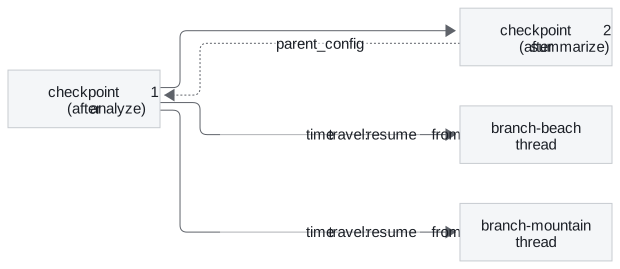
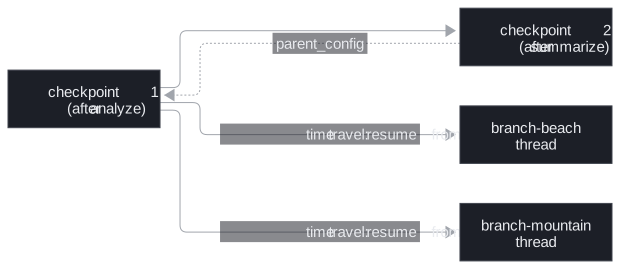
Both branch threads start from the same older checkpoint and then evolve on their own.
Pause for a Human With an Interrupt
interrupt(payload) pauses execution from inside a node and hands the payload to the caller under "__interrupt__". The checkpointer holds the paused state. The caller resumes with Command(resume=value) on the same thread_id, and inside the node interrupt() now returns that value.
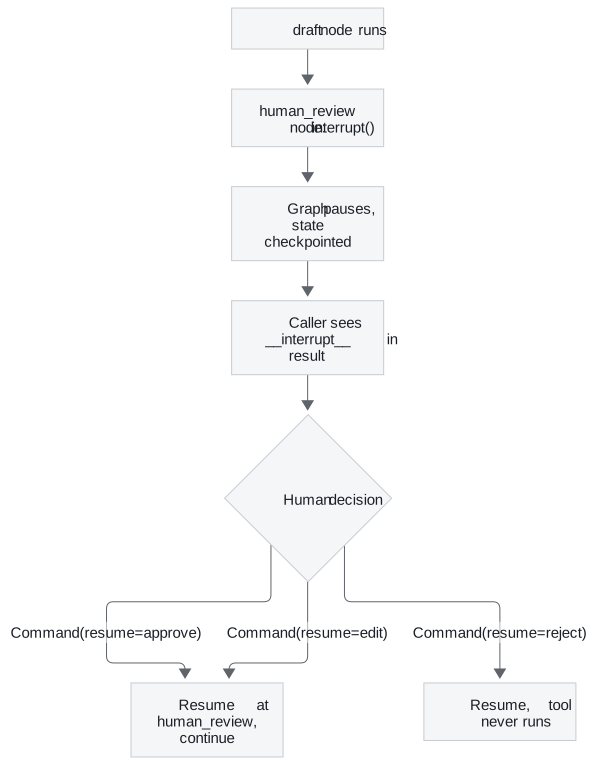
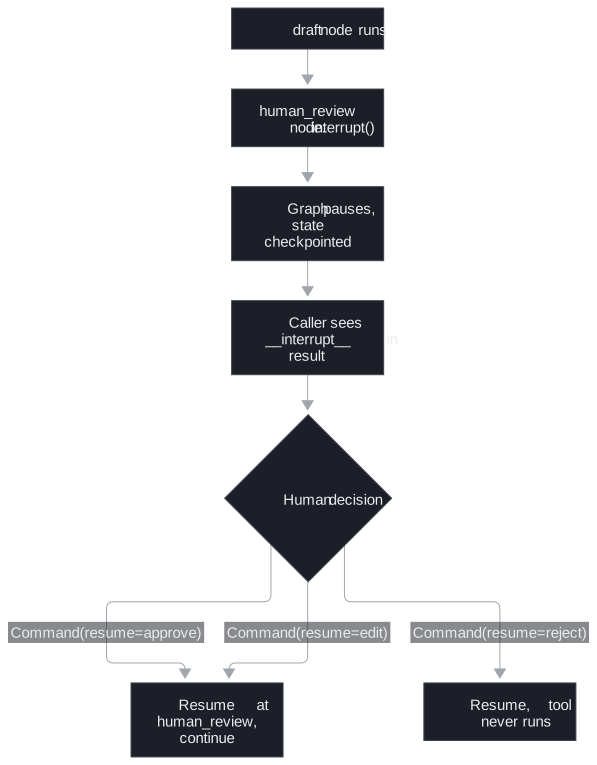
Approve and edit continue the run. Reject resumes it, but the tool never runs.
def human_node(state: State):
    value = interrupt({"text_to_revise": state["some_text"]})  # pauses here
    return {"some_text": value}                                 # runs on resume

final = graph.invoke(Command(resume="Edited text"), config)
Without a checkpointer there is no saved state to resume from, so a pause would be lost. A node can also call interrupt() in a loop to re-prompt until the human gives valid input.
The compile-time alternative is interrupt_before=[...] or interrupt_after=[...], which pauses between whole nodes with no code change inside them. Use it for a fixed approval gate. Use interrupt() only when the decision to pause depends on something the node just computed.
Apply the Same Pause at Three Points
The notebooks show three approval patterns, all built from one primitive. Pause before a whole turn with interrupt_before=["assistant"]. Edit state while paused with graph.update_state(thread, {...}), so the agent answers the corrected message instead of the original. Or wrap one tool's body in interrupt() so only that action is gated.
Gate the tools that cannot be undone, not the ones that can. A pause adds a checkpointer requirement and a human in the latency path. Pay that only for irreversible actions: sending money, sending an email, deleting data. A read-only lookup needs no gate. LangChain's HumanInTheLoopMiddleware wraps this primitive for named tools, with approve, edit and reject decisions.
Make Resume Safe to Repeat
On resume, the whole interrupted node re-runs from the top, not just the code after interrupt(). In the notebooks, a counting node printed its "started" line twice: once on the first pass and again on resume. Any side effect before the interrupt runs twice for one logical pass.
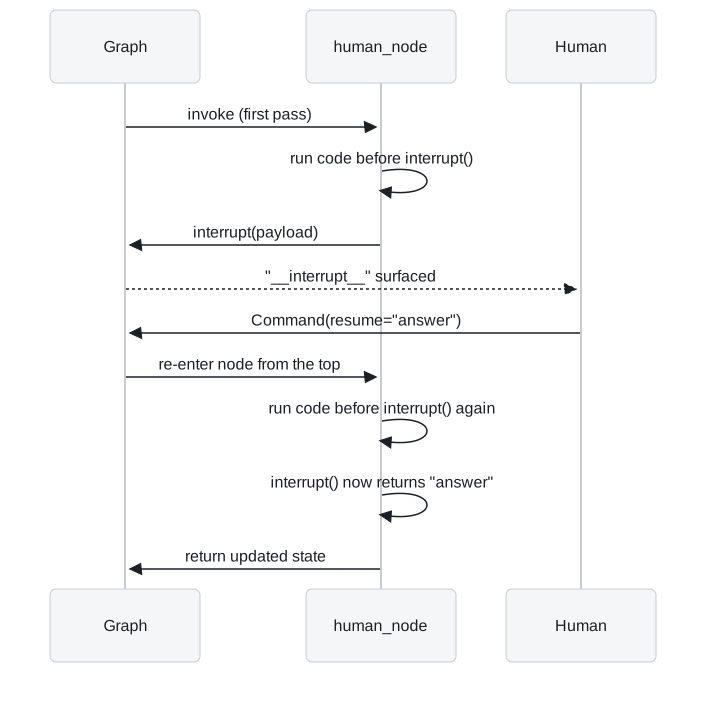
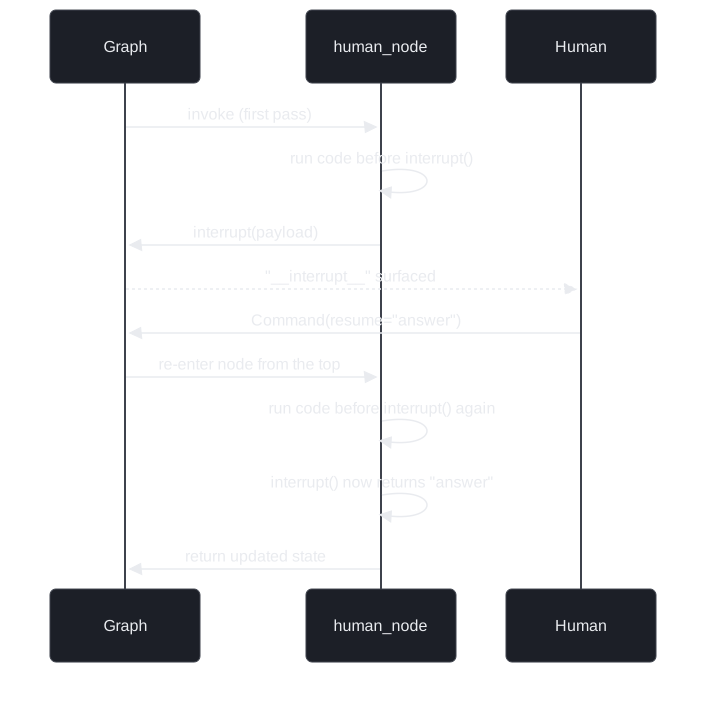
The second "run code before interrupt()" line is the side effect that runs twice.
Keep everything before an interrupt() read-only or idempotent. Move side-effecting work after the interrupt or into its own node. Checkpoints recover state, not actions already sent to the outside world. A refund keyed on ticket_id plus action type, and checked before executing, cannot be sent twice by a resumed run.
Warning: re-sending the original request does not resume a run. A thread holds one pending interrupt at a time. Re-invoking the original request on a paused thread starts a second run, and the next approval can resolve the wrong pending decision or re-attempt the side effect. Resume only with
Command(resume=...), and give each independent test its own freshthread_id.
Keep Conversation History Outside the Process
The same durability rule applies to chat memory in plain LangChain. A model has no memory between calls, so every "memory" strategy is a choice of what to re-send. The two sources describe it with different class names: the GenAI Engineering notes use the older ConversationBufferMemory family, while the LangChain tutorial uses RunnableWithMessageHistory and trim_messages.
| Strategy | Keeps | Cost |
|---|---|---|
| Whole buffer | Every turn | Grows until it overflows the context window |
| Window | Last k turns | Forgets abruptly at the boundary |
| Trim by tokens | As many turns as fit a token budget | Same abrupt loss, token-precise |
| Summary | A running summary of old turns | One extra model call per compression |
| Summary plus buffer | Recent turns verbatim, older ones summarised | The best balance for long chats |
A chat retrieval chain should also rewrite the question with history first, so "What is the price?" becomes "What is the price of the Pro plan?" before search. In production, store history in Redis or a database, not in Python objects. It then survives restarts and works across servers; SQLChatMessageHistory persists where InMemoryChatMessageHistory does not.
Worked Example: Refunds That Survive a Restart
A support agent must get human approval for any refund, keep that approval through a pod restart, and never send a refund twice. Use PostgresSaver with thread_id set to the ticket id, so a restarted pod resumes the ticket exactly where it paused, even mid-approval.
Put interrupt() inside the refund tool, immediately before the payment call, not before the assistant's whole turn. Read-only steps such as looking up order history then never pause. Key the refund on ticket id plus action type and check that key before executing. On resume the tool's node re-runs from the top, finds no prior refund for the key, and the human's decision is applied once. Each requirement in the prompt maps to one mechanism: durable checkpointer, interrupt placement, idempotency key.
Key Takeaways
- A checkpointer snapshots state after every node;
thread_idscopes a conversation; durable savers share the in-memory saver's interface. - Snapshots link through
parent_config, which makes time travel and branching cheap. interrupt()pauses inside a node and resumes onCommand(resume=...); compile-time interrupts suit fixed gates.- Gate only irreversible tools, at the point of the action.
- The interrupted node re-runs from the top on resume, so code before the interrupt must be idempotent and side effects need keys.
- Conversation history must be trimmed, windowed or summarised, and stored outside the process.
Check Yourself
A human-review node calls a paid API before
interrupt(). What happens on resume, and what is the fix? The whole node re-runs, so the API is called twice. Move the call after the interrupt or into its own node, or make it idempotent.Compliance forbids in-memory checkpoints for an approval workflow. What changes in the code? Only the
compile(checkpointer=...)argument, swapping inPostgresSaverorSqliteSaver. Graph and node code stay the same.When is
interrupt_beforea better choice than callinginterrupt()in the node? When the pause point is always "before this node", a fixed gate.interrupt()is for pauses that depend on data computed inside the node.